
Slush and granita look alike at first glance. Both are icy, sweet and built for hot days, and plenty of people use the two names as if they mean the same thing. They don’t. The slush vs granita difference comes down to three things: the size of the ice crystals, how each one is made, and how it is served. For a home cook that is a matter of taste. For a business, it decides which equipment you buy, how much staff time each cup takes and what customers expect when they order. This guide explains what each treat is, compares them side by side helps you decide which one on your menu.
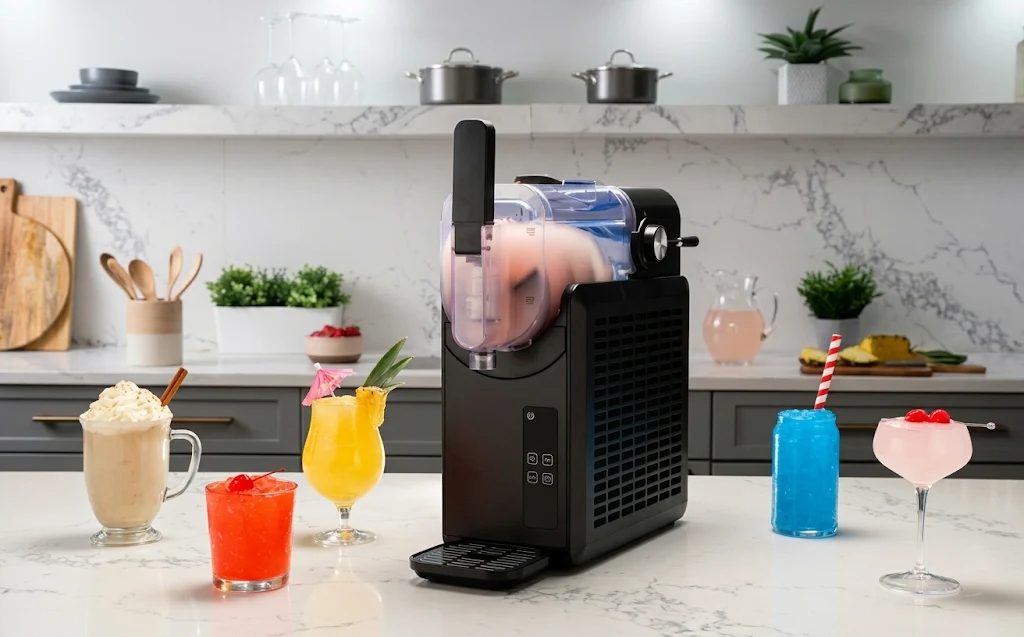
Traditional Sicilian granita is frozen and scraped into coarse crystals. A commercial slush machine freezes and stirs liquid mix continuously to make a smooth, pourable drink.
What Is Slush?
How a Slush Machine Makes It
Slush is made in a machine that chills a liquid mix while stirring it nonstop. A cold barrel or bowl freezes the mix from the outside in, and a rotating auger keeps breaking up the ice as it forms. Because the mix never gets the chance to set into a solid block, the ice crystals stay small and evenly spread through the liquid. The machine then holds the drink at that frozen point for hours, so every cup poured looks and tastes the same as the first. Many commercial machines come with one, two or three bowls, which lets you run several flavors at once from a single unit.
Texture and How It’s Served
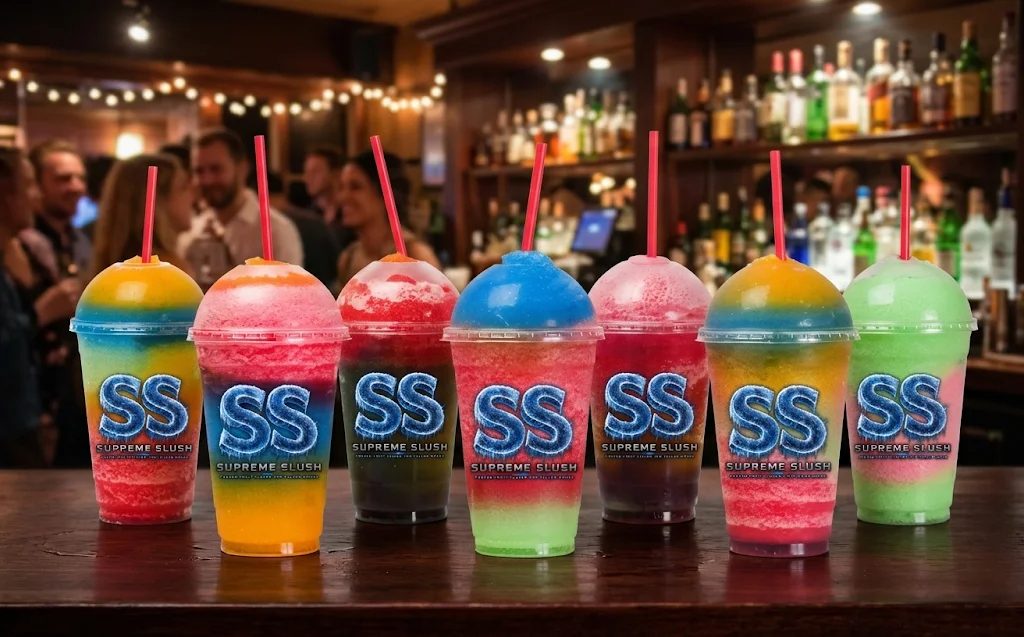
The result is smooth, fine and pourable. Slush is a drink first: it goes into a cup with a lid and a straw, and customers sip it rather than eat it. That is why it fits stores, bars, cinemas, events and anywhere people want something cold and quick. Slush is also the base for frozen cocktails such as margaritas and daiquiris, served from the same type of machine. Since the product is always ready, a customer can order and walk away in moments, which is a big part of its appeal for busy counters.
What Is Granita?
Where Granita Comes From
Granita comes from Sicily, Italy. Its name comes from the Italian word granire, meaning to granulate, which describes its grainy texture. In Sicily it is often eaten for breakfast in summer, served with a soft brioche roll for dipping. Classic flavors there include lemon, almond, coffee and mulberry. Granita has since spread across Italy and beyond, and today it shows up on café and restaurant menus around the world, often as a light summer dessert.
How Granita Is Made the Traditional Way
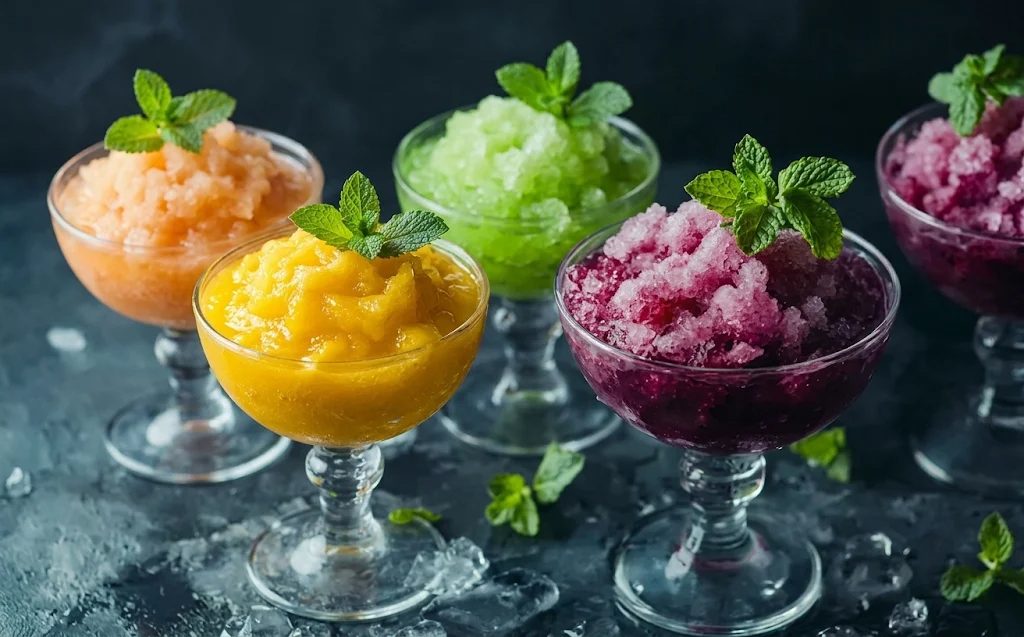
Traditional granita starts with the same basics as slush: water, sugar and a flavoring. The mixture is poured into a shallow pan and placed in a freezer. Every half hour or so, it is scraped and stirred with a fork to break the ice into flakes. After a few rounds, the result is a pile of separate, crunchy crystals. It is served in a glass or bowl and eaten with a spoon, more like a dessert than a drink. Because it melts quickly once scraped, granita is usually made in batches and served soon after, rather than held for hours.
Slush VS Granita Difference: Side by Side
Ice Crystals and Texture
This is the biggest difference. Slush has tiny crystals suspended in liquid, so it flows and can be drunk through a straw. Granita has larger, flaky crystals that sit apart from each other, giving it a coarse, spoonable texture. Sicilian granita can be smoother than the home version, but it is still firmer and grainier than a slush.
Ingredients and Flavors
The ingredients are close. Both are water ices made from water, sugar and flavor, with no dairy in the classic versions. The difference is the flavor tradition. Granita leans toward coffee, almond, citrus and seasonal fruit. Slush leans toward bright, bold fruit flavors that stand out in a clear cup. Supreme Slush flavors such as mango, strawberry and electric blue raspberry are typical of what customers look for in a slush. If you are planning a lineup, our guide to the best slush flavors to sell covers how to build a first menu.
Quick Comparison Table
Here is how the two compare on the points that matter most when you are planning a menu:
Why “Granita Machine” Often Means a Slush Machine
Here is where many buyers get confused. In the restaurant and foodservice trade, frozen beverage dispensers are often called granita machines. In many cases, the machine sold as a granita machine is the same kind of equipment used to make slush. Some models let you adjust the thickness, the product can be made a little firmer, but it will be a machine-stirred frozen drink, not a hand-scraped Sicilian granita. When you shop for equipment, ignore the name on the listing and check the texture settings, bowl size and cleaning needs. It also helps to ask the seller what kind of mix the machine is built for, since most units are designed around ready-made concentrates diluted with water.
What Can Commercial Slush and Granita Machines Serve?
Compatible models can serve fruit slushies, frozen margaritas, strawberry daiquiris, and Piña Coladas. Before buying, compare bowl capacity, freezing performance, consistency settings, and cleaning requirements. Follow the supplier’s dilution directions and confirm mix and alcohol compatibility with the manufacturer.
See the equipment guide, browse flavors, or learn how to start selling slushies.
Which One Fits Your Business?
Choose Slush for Speed and Volume
If you serve many customers in short bursts, slush is the practical choice. Once the machine is running, staff simply pull a handle and pour, with no scraping, plating or waiting. Every cup comes out the same, which keeps customers happy and makes portion control easy. Wondering whether the investment pays off? Read: are slush machines profitable.
Choose Granita for a Café-Style Dessert Menu
Granita suits places that sell fewer servings at a higher price, such as cafés, Italian restaurants and dessert bars. It works well as a summer special or a palate cleanser after a meal. The trade-off is labor: traditional granita needs planning, freezer space and repeated scraping, so it is hard to scale on a busy day. Many venues that offer it keep the menu small, with one or two rotating flavors.
Getting Consistent Results From a Mix
Whichever you serve, consistency starts with the mix. A ready-made concentrate removes the guesswork of balancing sugar and flavor yourself. The sugar level in a mix affects how it freezes, so a properly balanced product helps the machine hold the right texture through the day. Supreme Slush mixes are designed for easy preparation, and the margarita mix, for example, uses a simple 1+3 ratio: one part mix to three parts water. Always follow the ratio on each flavor’s label. If you are stocking up, read our guide to buying wholesale slush mix before you place your first order.
Conclusion
The slush vs granita difference is simple once you know it: slush is a smooth, machine-made drink built for speed, and granita is a coarse, hand-scraped dessert built for slower service. Choose the one that matches your customers, your staff and your space. If slush is the right fit, Supreme Slush offers a wide range of flavors for commercial machines. Contact us to find the right mix for your business.
Bold flavor. Ice cold. Built for business.
Frequently Asked Questions
No. They share the same basic ingredients, but a slushie is machine-made with fine crystals and served as a drink, while granita is scraped by hand into coarse crystals and eaten with a spoon.
Some machines have thickness settings that produce a firmer, more granita-like texture. A true Sicilian-style granita is still made by freezing and scraping. Check your machine’s manual before changing settings, as the right setting varies by model and by mix.
Granita. Its crystals are larger and flakier, while slush crystals are small and evenly mixed into the liquid.
They are close relatives. Both are water ices made from sugar, water and flavor, but Italian ice is usually smoother and more compact, while granita is grainier.
Yes. Mix the concentrate with water at the ratio on the label, pour it into a shallow pan, freeze it and scrape it every 30 minutes or so until it turns into flaky crystals.