
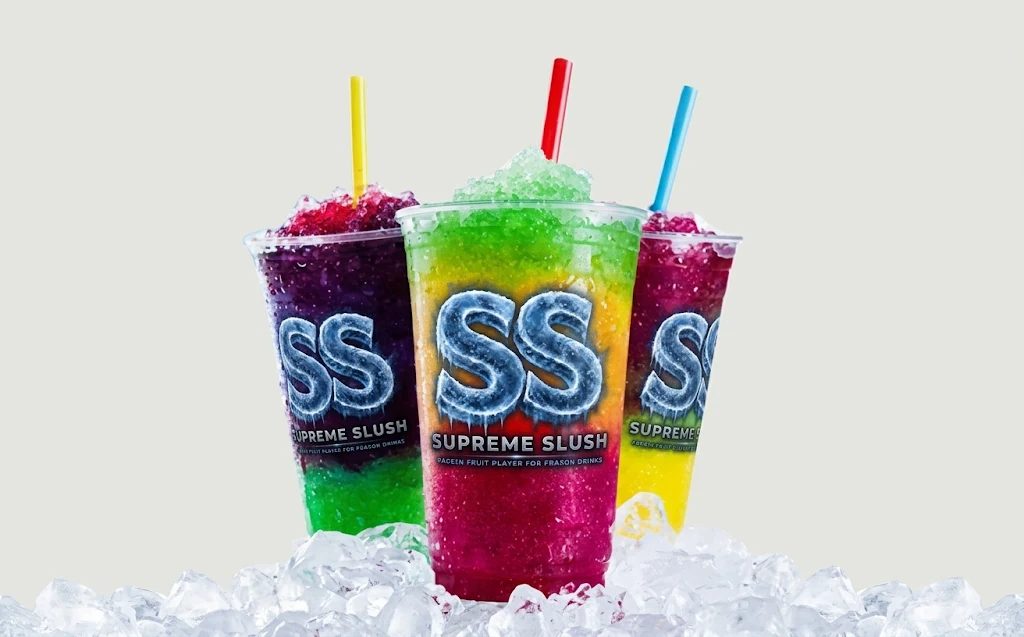
If you run a slush machine, two numbers decide how your day goes: how much water you add and how many cups you get out. Get the slush mix to water ratio wrong and the drink comes out thin and icy, or so sweet and soft that it never sets in the bowl. Skip the yield math and you cannot price a cup, plan your stock, or know when to reorder. This guide covers both. You will learn what a ratio like 1+3 actually means, how to work out how many servings in a gallon of slush mix you can expect for each cup size, and what eats into that number during a busy shift.
Slush Mix to Water Ratio: How to Get It Right
What the Ratio Actually Means
A ratio such as 1+3 (sometimes written 1:3) tells you how many parts of concentrate go with how many parts of water. The first number is always the mix and the second is the water. So 1+3 means one part slush concentrate and three parts water, four parts in total.
A “part” can be any unit, as long as you use the same unit for both. One quart of mix plus three quarts of water follows the same ratio as one gallon of mix plus three gallons of water. Only the batch size changes.
A Real Example: The 1+3 Ratio
Take Supreme Slush margarita mix as an example. Its listed ratio is 1+3: one part concentrate to three parts water. In practice that means:
- 1 quart of mix + 3 quarts of water = 1 gallon of finished slush
- 1 gallon of mix + 3 gallons of water = 4 gallons of finished slush
- ½ gallon of mix + 1½ gallons of water = 2 gallons of finished slush
- Six half-gallon bottles (3 gallons of mix) + 9 gallons of water = 12 gallons of finished slush before service losses
One gallon of concentrate becomes four gallons in the machine, which is why the ratio has a big effect on your cost per cup.
Not every flavor uses the same ratio. Concentrates are made with different sugar levels, so always check the product label for the flavor you are pouring and follow that number rather than reusing one ratio for everything.
Why the Ratio Matters in a Machine
A slush machine freezes the mix by scraping it against a cold barrel, and sugar controls how it freezes. Too much water dilutes the sugar, so the drink turns icy, crunchy and bland. Too little water leaves so much sugar that the slush stays soft and syrupy and tastes overly sweet. Choosing a slush mix for commercial slush machine use, then mixing it exactly as directed, keeps the texture steady from the first cup to the last.
Frozen Cocktail Flavors Need Extra Care
Alcohol lowers the freezing point of a drink, so adding spirits changes how a batch behaves in the barrel. If you serve frozen cocktails, for example with a pina colada slush mix, follow the recipe on the label and your machine manual for how much spirit to add and whether the water amount needs adjusting. Do not simply pour alcohol into a standard non-alcoholic batch.
How Many Servings in a Gallon of Slush Mix?
Start With What “a Gallon” Means
One US gallon equals 128 fluid ounces. Before you count servings, be clear about which gallon you mean:
- A finished gallon is ready-to-pour slush, with concentrate and water already combined. It holds 128 oz.
- A concentrate gallon is one gallon of mix straight from the jug. Once you add water, it makes far more than 128 oz of finished slush.
Mixing up the two can throw your yield estimate off by a factor of four.
The Simple Servings Formula
The formula itself is short:
Servings = total finished ounces ÷ cup size in ounces
For a finished gallon, the total is simply 128 oz. For a gallon of concentrate, work out the total volume first:
Add the parts of the ratio together. For 1+3, that is 4 parts.
Multiply by the size of one part. If one part is 1 gallon (128 oz), the batch is 4 × 128 = 512 oz.
Divide by your cup size and round down, because you cannot sell a partial cup.
For example, 512 oz ÷ 16 oz = 32 full servings.
Servings by Cup Size
The table below uses the 1+3 example: 1 gallon of concentrate plus 3 gallons of water, which gives 512 oz of finished slush. The last column shows a single finished gallon (128 oz) for comparison.
These are theoretical maximums, worked out with simple division and rounded down. If your flavor uses a different ratio, change the total ounces and run the same formula. Treat the table as a starting point, then allow for the real-world losses below.
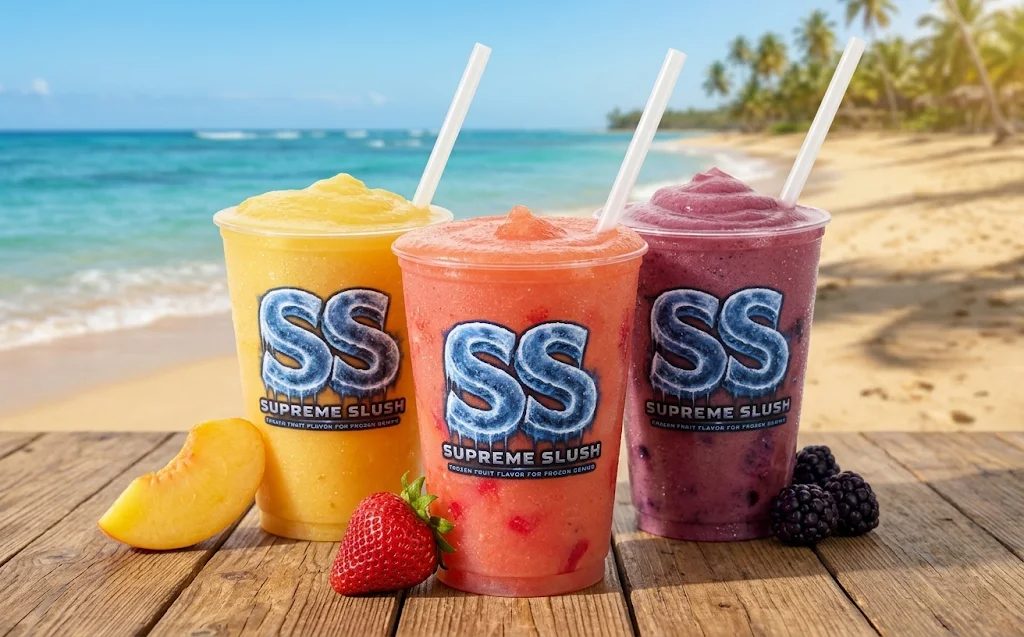
How Much Does Each Serving of Commercial Slush Mix Cost?
Divide the cost of the concentrate used by the number of sellable servings. For example, $20 in concentrate divided by 50 sellable servings is $0.40 in mix per cup. Add serving supplies and spirits separately when calculating the full drink cost.
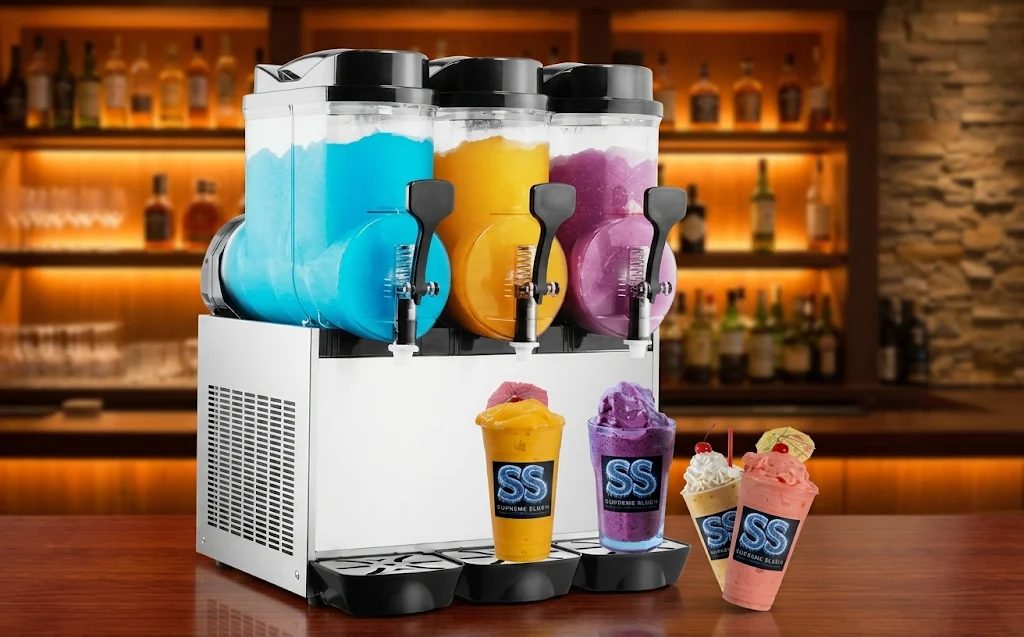
Track sellable cups after bowl priming, overfilling, spills, and cleaning waste. Follow the mix directions and check compatibility before using a slush, granita, frozen beverage, or frozen cocktail machine. For frozen margaritas, Piña Coladas, and strawberry daiquiris, check your machine’s alcohol limits as well.
What Changes Your Yield in Real Life
The math gives you a ceiling. In a working shop, a few things pull the number down.
Machine Priming and Bowl Size
Every machine needs a minimum amount of product in the bowl before it can freeze and dispense properly. That product sits in the machine, not in a cup, until the end of the day. Check your manual for the minimum fill level and factor it into each batch.
Portion Control and Spillage
A 16 oz cup topped with a dome can easily hold more than 16 oz. Over a full day, that small overfill adds up to several lost servings. Train staff to fill to a line, use the same cups every time, and plan a small buffer for drips and spills based on what you actually lose in a typical week.
Cleaning and Waste
Machines need regular cleaning, and any slush left in the bowl at cleaning time is usually poured out. Over-pouring during a rush, test cups and end-of-season leftovers all reduce real yield. Tracking how many cups you sell per jug of concentrate for a few weeks gives you an honest number to plan with.
Tips for Consistent Slush Every Batch
Measure, Don’t Eyeball
Use a marked pitcher or measuring jug for both the mix and the water, and use the same one every time. An eyeballed pour might be close enough once, but small errors repeat across every batch and show up as changes in texture and sweetness.
Mix Well Before You Pour
Concentrate is thicker and heavier than water, so it tends to sink. Stir or whisk the batch until it looks even before it goes into the machine. If the mix is not fully blended, the bottom of the bowl gets more sugar than the top and the slush freezes unevenly.
Ask Your Supplier for the Exact Ratio
Ratios differ between brands and even between flavors. If a label is unclear or you are switching products, ask the supplier directly. The Supreme Slush team can confirm the correct ratio for each flavor, and if you are still choosing a product, their guide to the best slush mix for commercial machine use is a good place to compare options.
Conclusion
Two numbers drive a good slush program. The slush mix to water ratio sets your texture and taste, and knowing how many servings in a gallon of slush mix you get sets your cost per cup and your reorder schedule. Follow the label, measure every batch, and track your real yield over time. If you need help choosing flavors or confirming a ratio, contact Supreme Slush and get your next batch right from the start.
Bold flavor. Ice cold. Built for business.
Frequently Asked Questions
Use the ratio printed on the product label. For a 1+3 mix, add three parts water to every one part concentrate, using the same unit of measure for both.
It is best not to. Changing the water amount changes the sugar level, which affects how the slush freezes and how it feels in the mouth. Stay within the guidance the manufacturer gives.
A finished gallon (128 oz) gives 8 drinks. One gallon of concentrate mixed at 1+3 makes 512 oz, which gives 32 drinks.
Yes. Alcohol lowers the freezing point, so follow the cocktail recipe on the label and your machine manual instead of adding spirits to a standard batch.
Icy slush usually means too much water. Runny or soft slush often means too little water, too much alcohol, or a machine setting that needs adjusting. A batch that was not mixed well can cause either problem.